My Longevity Journey
My Blueprint Advanced Panel Results: A Deep Dive into Longevity Biomarkers

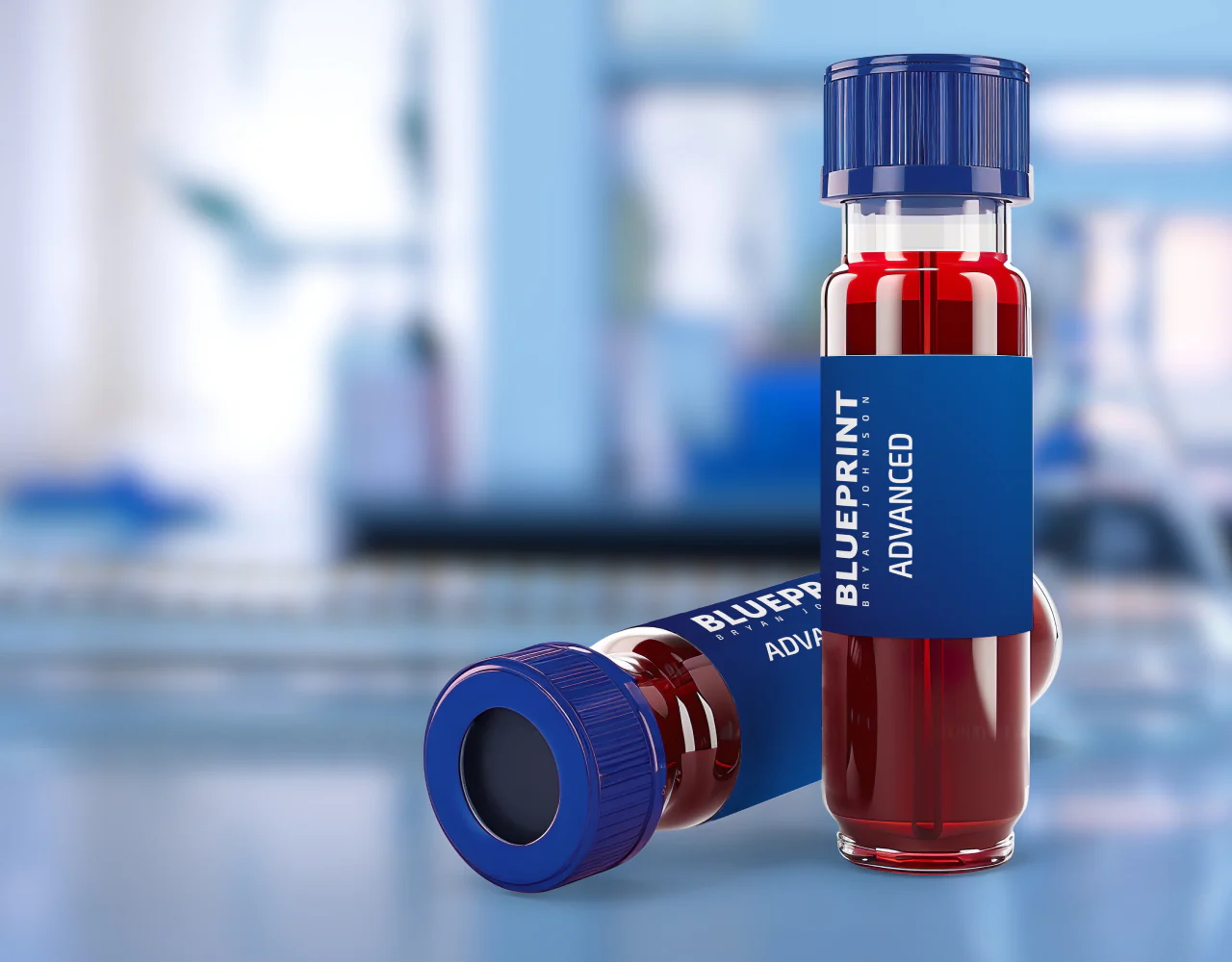
I received my Blueprint Advanced Panel blood work results in record time. See what came back strong, what raised red flags, and where I’ll focus next to support my long-term health and longevity.
Today, I’m excited to share that my Blueprint Advanced Panel results have officially arrived. I recently visited Labcorp to complete the testing, which involved 11 vials of blood and a urine sample. Blueprint had initially estimated a turnaround time of four to six weeks, but to my surprise, the results were ready in just 10 days.
About the Blueprint Advanced Panel
One of the standout features of the Blueprint Advanced Panel is its depth. It measures 110 biomarkers across key areas of health, including cardiovascular function, metabolic health, hormones, inflammation, nutrient status, organ function, and even toxic exposure.
This level of testing goes far beyond standard blood panels offered through routine healthcare. It provides a much clearer and more actionable snapshot of your true biological status. That’s essential if you’re serious about optimizing for healthspan and longevity.
At $375, it’s also a surprisingly strong value compared to typical lab costs, even those billed through insurance. It’s the same comprehensive panel that Bryan Johnson, the creator of Blueprint, uses to fine-tune his own health protocols.
Key Highlights From My Results
Now that I have the data in hand, it’s time to dive into the good, the bad, and the areas where I need to improve. One important note: at least for now, Blueprint does not provide personalized recommendations for improving your biomarkers. It’s up to you to act on the insights.
Here is a quick summary of some of the key findings:
| Category | Result | Range | Notes |
|---|---|---|---|
| LDL Particle Number | 830 nmol/L | <1000 nmol/L | Optimal, low cardiovascular risk |
| Apolipoprotein B (ApoB) | 87 mg/dL | <90 mg/dL | Optimal, important for heart health |
| HDL Cholesterol | 45 mg/dL | >39 mg/dL | Solid, protective for cardiovascular health |
| Triglycerides | 113 mg/dL | 0–149 mg/dL | Healthy range |
| Glucose (Fasting) | 94 mg/dL | 70–99 mg/dL | Normal, worth monitoring |
| Hemoglobin A1c | 5.4% | 4.8–5.6% | Good, not prediabetic |
| Vitamin D | 59.2 ng/mL | 30–100 ng/mL | Excellent |
| Omega-3 Index | 3.1% | >5.5% optimal | Low, increased cardiac risk |
| C-Reactive Protein (CRP) | 4.38 mg/L | 0–3.0 mg/L | Elevated inflammation |
| Estradiol | 43.0 pg/mL | 7.6–42.6 pg/mL | Slightly elevated for a male |
| Insulin | 2.4 uIU/mL | 2.6–24.9 uIU/mL | Slightly low |
| Uric Acid | 5.0 mg/dL | 3.8–8.4 mg/dL | Normal |
| Homocysteine | 11.1 umol/L | 0–14.5 umol/L | Within range |
Diving Into The Results
After reviewing the data, here’s how I see the good, the bad, and the ugly. These insights will guide my next conversation with my doctor and shape the actions I take moving forward.
The Good
- Lipid Profile (LDL-P and ApoB): My LDL Particle Number and Apolipoprotein B are both in optimal ranges. This signals a low burden of artery-clogging particles and a reduced cardiovascular risk.
- HDL Cholesterol (Quantity): While HDL functionality was suboptimal, my HDL level at 45 mg/dL remains protective and above the clinical minimum.
- Triglycerides: At 113 mg/dL, my triglycerides fall comfortably in the healthy range. This supports a lower risk for metabolic syndrome.
- Blood Sugar and A1c: My fasting glucose (94 mg/dL) and Hemoglobin A1c (5.4%) are within normal ranges. This suggests strong blood sugar regulation.
- Vitamin D: A level of 59.2 ng/mL is well-optimized and supports immune function, mood, and inflammation control.
- Homocysteine: At 11.1 umol/L, this inflammation-linked marker remains within range. That helps lower my vascular risk profile.
- Uric Acid: Measured at 5.0 mg/dL, this value is well-controlled and reduces concerns about gout or kidney-related cardiovascular stress.
The Bad
- C-Reactive Protein (CRP): At 4.38 mg/L, my CRP is elevated. This suggests systemic inflammation, which is a known driver of cardiovascular disease and aging. It is a clear area for improvement.
- Omega-3 Index: A low score of 3.1% puts me in the high-risk zone for sudden cardiac events. Ideally, this number should be above 5.5%. This result suggests I need to improve omega-3 intake through supplementation or diet.
- HDL Functionality Markers: While HDL quantity is adequate, particle size (9.0 nm) and Large HDL-P (3.5 umol/L) are low. This means my HDL may not be functioning efficiently to remove cholesterol or suppress inflammation.
- BUN and BUN/Creatinine Ratio: My BUN was slightly elevated at 25 mg/dL, and the ratio came in at 24. These may indicate mild dehydration, protein metabolism issues, or early signs of kidney stress. I will monitor these more closely.
- Amylase: At 115 U/L, my amylase is slightly high. This could be benign, but it may also indicate pancreatic or digestive system stress.
- Insulin: Fasting insulin was low at 2.4 uIU/mL. This might reflect excellent insulin sensitivity, but it could also mean reduced pancreatic output. Additional context from future testing will be helpful.
The Ugly (Needs Focused Action)
- Chronic Inflammation Risk: The combination of elevated CRP and a low Omega-3 Index points to a pro-inflammatory internal state. This pattern is strongly associated with higher risk for cardiovascular events, cognitive decline, and biological aging.
- Suboptimal HDL Functionality: Despite adequate HDL levels, the particle quality is poor. Low size and count limit HDL’s ability to remove cholesterol and protect against plaque buildup. This weakens one of the body’s key defense mechanisms.
- Preventive Screening Gaps: These biomarker patterns may justify deeper cardiac imaging. A Coronary Artery Calcium (CAC) scan could help detect early plaque formation, even if traditional markers appear normal. Given the elevated CRP and HDL dysfunction, it may be worth pursuing.
Next Steps
Based on these findings, I’ve scheduled a follow-up appointment with my primary care physician to review everything and develop a plan.
Here are some changes I’m considering:
- Add a high-quality Omega-3 supplement to increase my Omega-3 Index and support heart health.
- Implement anti-inflammatory strategies such as adding antioxidant-rich foods, reducing stress, and possibly supplementing with curcumin.
- Monitor hormone levels more closely and explore natural ways to optimize estradiol through lifestyle changes and targeted nutrition.
- Retest in six months to track improvements and refine the strategy as needed.
I’m following Bryan Johnson’s philosophy of “test, not guess.” This data gives me a foundation and baseline for making smarter, more science-based decisions going forward.
Final Thoughts
Getting my results back so quickly has been incredibly motivating. While there is work to do, especially around inflammation and HDL function, the overall picture is encouraging.
Knowing exactly where I stand gives me confidence. There is no more guessing or vague goals, only clear data and specific targets to guide my next steps.
I’ll continue to share updates as I implement changes, track my progress, and aim to improve my numbers in the next round of testing. Stay tuned for the next steps in my Don’t Die journey!
Copy of Blueprint Advanced Panel Results
🩺 Disclaimer
The content on I Won’t Die is for informational and educational purposes only. It is not a substitute for professional medical advice, diagnosis, or treatment. Always consult a qualified healthcare provider with any health concerns.
🚀 Get Started with Blueprint
Start optimizing your health today with $25 off your first order! Use our referral code to begin your Blueprint journey and take control of your longevity.
🏋️♂️ Track Your Sleep, Workouts & Recovery
Boost your performance and recovery with Whoop. Join with my referral link to get a free WHOOP 5.0 and one month free!
📲 Download the I Won’t Die App
Stay ahead with the latest news, updates, and insights. Download the I Won’t Die app now on the Apple App Store and Google Play!
📩 Contact Us
Have tips, photos, or questions? Want to collaborate? Reach out at [email protected] — we’d love to hear from you!
🔗 Stay Connected
Follow us on Don't Die, Facebook, X, Instagram, YouTube, and LinkedIn for Blueprint longevity and Bryan Johnson updates.
📬 Subscribe to I Won’t Die Newsletter
Get the latest longevity breakthroughs, Blueprint updates, and exclusive content straight to your inbox — sign up now!


I took Bryan Johnson’s at-home microplastics test to get a baseline and learn how to reduce plastic toxins in my body.
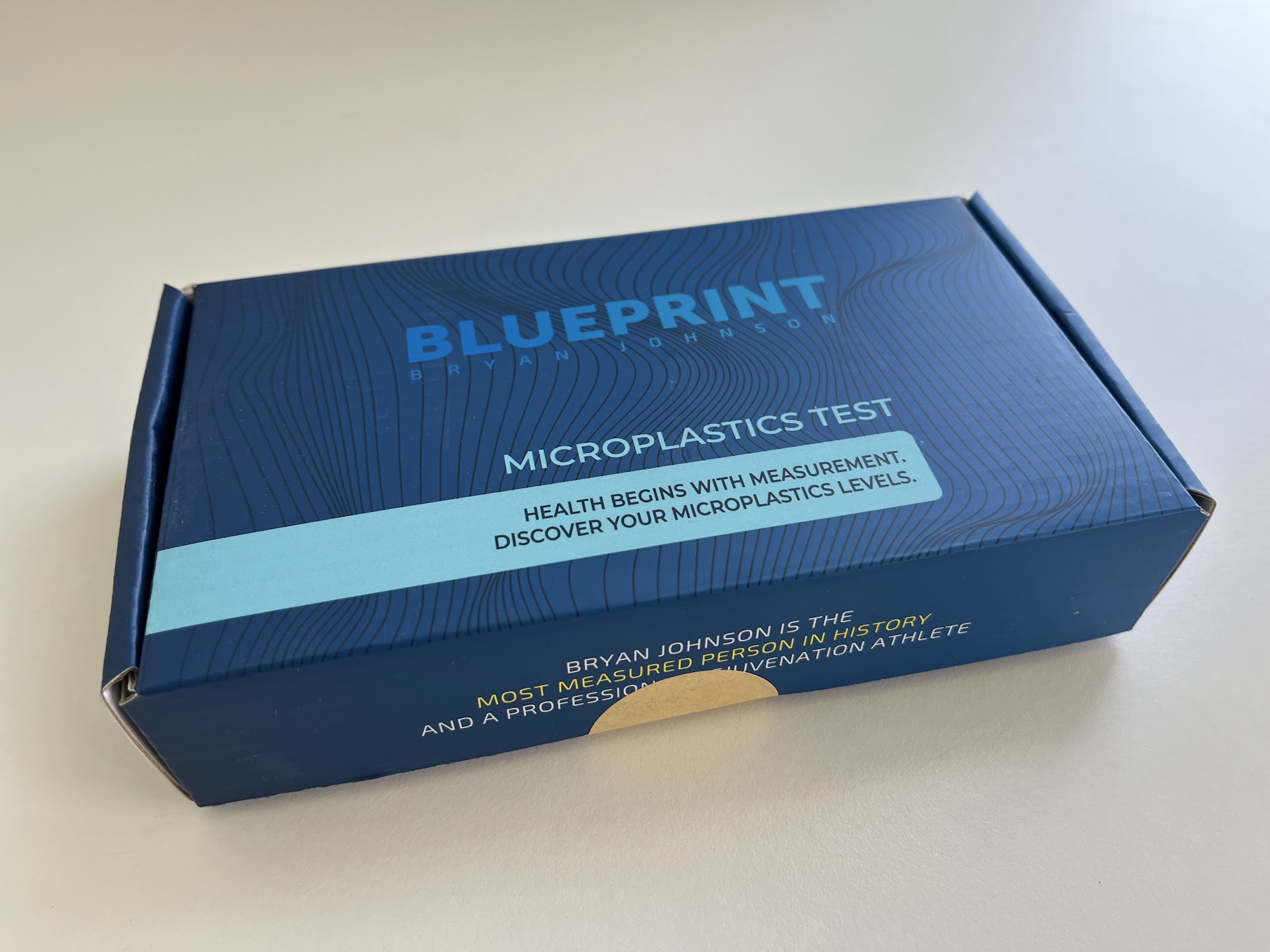
Today, I took the Blueprint Microplastics Blood test. I officially joined the ranks of people measuring microplastics in their body, one of the most surprising health threats of our time. These tiny particles are showing up everywhere, from bottled water to human bloodstreams. Blueprint, the company behind Bryan Johnson’s health protocol, now offers one of the world’s first microplastics blood test using a simple at-home finger prick.
Why I Took This Test
I wanted a clear, scientific baseline. Microplastics have been linked to inflammation, hormone disruption, and even cellular damage. Getting a measurement felt like the next logical step in my personal health journey. Like Bryan says: health begins with measurement.
Step-by-Step Process
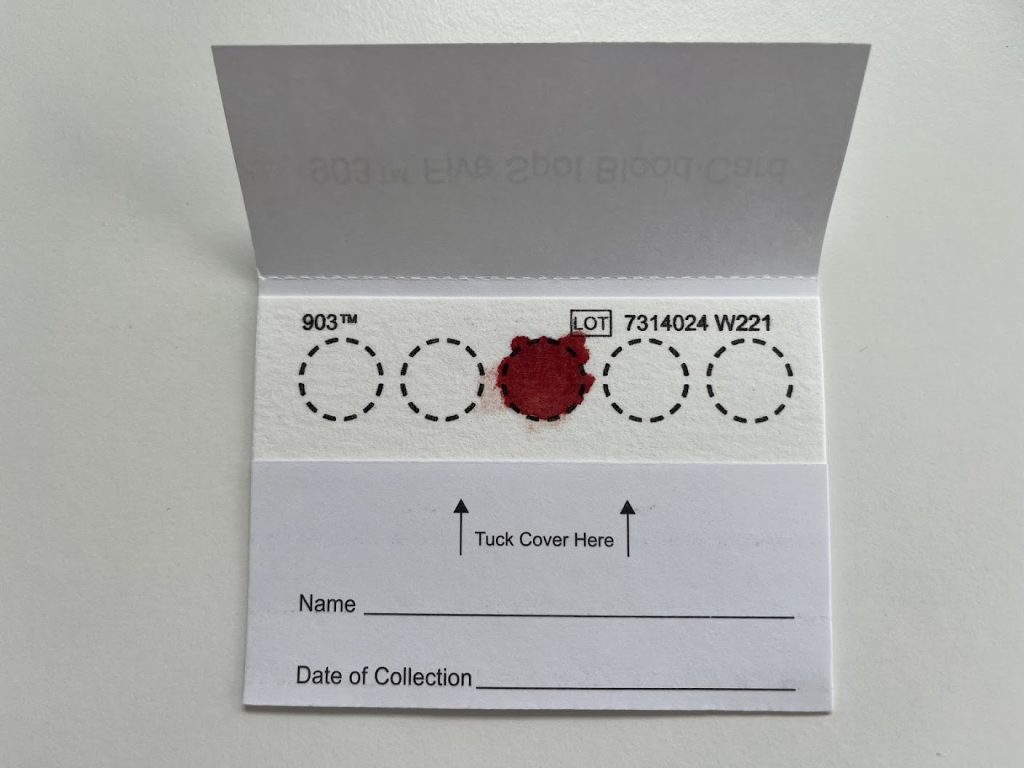
The test came in a sleek box, just like the Blueprint Speed of Aging test I took earlier this year, with detailed instructions and everything I needed: alcohol wipes, lancets, gauze, bandages, a five-spot blood card, and a pre-paid return envelope. I started by scanning the QR code to register my test online, which took less than a minute.
After washing my hands, I wiped down a few fingers with the alcohol pad and grabbed a lancet. I started with my ring finger, but barely any blood came out. The middle finger was a different story. I pricked the side, applied pressure using a nearby finger, and blood began to flow. The pain was mild, more pressure than sting.
Using the provided gauze, I wiped the first drop and then gently massaged my finger to encourage blood flow. I filled one circle on the blood card completely, ensuring it soaked through as instructed. Once dry, I sealed the card in its protective sleeve, placed it in the return envelope, and dropped it off at the post office.
What Happens Next
I should receive my results in 4 to 6 weeks by email and inside the Don’t Die app. The lab processes samples in a plastic-free facility using glass and metal tools to avoid contamination. This makes it one of the only validated microplastics test of its kind on the market.
Why This Matters
Microplastics enter our bodies through food, air, water, and even personal care products. A 2022 study, found plastic particles in human blood for the first time, raising concerns about their long-term effects. Early research suggests they may disrupt hormones, trigger inflammation, and even contribute to chronic disease. Knowing your levels allows you to take action with filtering strategies, lifestyle changes, and dietary adjustments.
Final Thoughts
Measuring microplastics in my blood felt good and also empowering. The Blueprint test is fast, easy, and gives you actionable insight into something invisible but potentially harmful. I’m excited to see my results and then begin the next step, removing more microplastics from my environment and body.
This is just the beginning. 🙌
🩺 Disclaimer
The content on I Won’t Die is for informational and educational purposes only. It is not a substitute for professional medical advice, diagnosis, or treatment. Always consult a qualified healthcare provider with any health concerns.
🚀 Get Started with Blueprint
Start optimizing your health today with $25 off your first order! Use our referral code to begin your Blueprint journey and take control of your longevity.
🏋️♂️ Track Your Sleep, Workouts & Recovery
Boost your performance and recovery with Whoop. Join with my referral link to get a free WHOOP 5.0 and one month free!
📲 Download the I Won’t Die App
Stay ahead with the latest news, updates, and insights. Download the I Won’t Die app now on the Apple App Store and Google Play!
📩 Contact Us
Have tips, photos, or questions? Want to collaborate? Reach out at [email protected] — we’d love to hear from you!
🔗 Stay Connected
Follow us on Don't Die, Facebook, X, Instagram, YouTube, and LinkedIn for Blueprint longevity and Bryan Johnson updates.
📬 Subscribe to I Won’t Die Newsletter
Get the latest longevity breakthroughs, Blueprint updates, and exclusive content straight to your inbox — sign up now!
Don't Die Updates
May WHOOP MG Report: 100 Days of Don’t Die, Overreaching Insights, and a Recovery-Driven Breakthrough

This month marked 100 straight 100-point scores in Don’t Die with rising strain, smarter recovery, and leaderboard momentum powered by the new WHOOP MG.
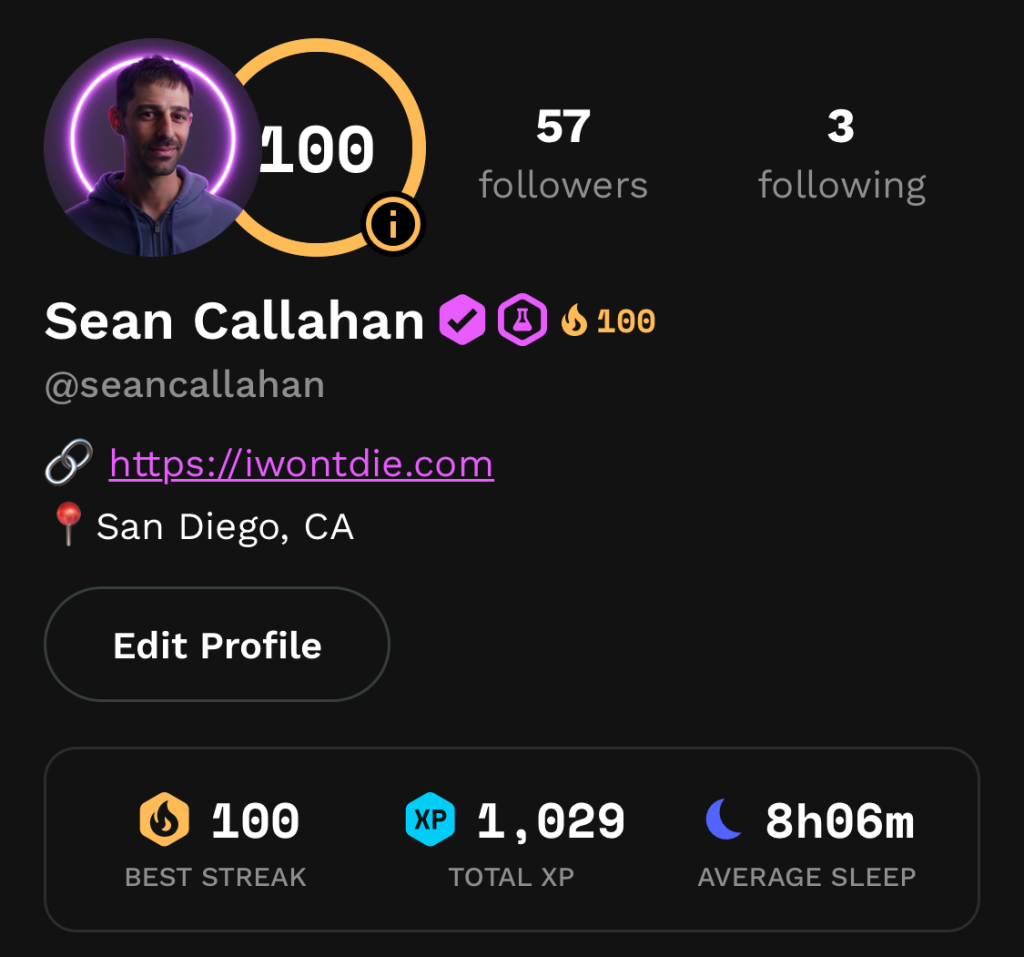
Today, I’m celebrating 100 straight days of 100-point scores in Don’t Die. May 2025 was a milestone month. I hit 100 consecutive days of perfect scores in the Don’t Die app, landing a spot on multiple leaderboards and cracking the global top 75 for current streaks. This streak was a test of consistency, resilience, and data-driven training, now powered by my WHOOP MG upgrade.
Compared to earlier months, May brought more intensity, more volume, and a closer look at the edge between growth and overreaching. WHOOP MG helped me navigate recovery with clarity, while Don’t Die turned every day into a measurable opportunity to improve.
Strain: Most Active Month So Far
May blew past every month in terms of total activity, with 57 tracked workouts totaling 50 hours and 38 minutes. That included:
- 31 runs
- 6 rounds of golf
- 4 walks
- And even a new addition: paddleboarding
My average daily strain held steady at 14.1, but with more training volume than ever before. Not surprisingly, this led to an uptick in overreaching days, especially Sundays, which averaged a 15.6 strain.
What is Overreaching?
Overreaching happens when your strain exceeds your recovery readiness. It’s sometimes necessary for growth, but repeated too often can wear you down. WHOOP flagged several days in May where I went past optimal load.
Training takeaway: I need to protect the green recovery days and use them wisely, not ignore them.
Recovery: Quietly Getting Stronger
While I trained harder, my body responded. Here’s what the WHOOP MG data showed:
- Heart Rate Variability (HRV): 30 ms (up from 29 ms in April and 25 ms in January)
- Resting Heart Rate (RHR): 47 bpm (matching April and down from 50 bpm in January)
Even with more activity, my cardiovascular health improved. This shows my body is adapting and recovering more efficiently than in previous months.
WHOOP MG Insight: Watching HRV and RHR trends is far more important than watching daily numbers. These small, steady changes signal big health wins.
Sleep: Slightly Down, Still Effective
Sleep saw a minor dip this month:
- Average hours slept: 8h10m (down from 8h19m in April)
- Restorative sleep: 1h46m (SWS) and 1h10m (REM), both slightly lower than April
Still, I hit 7+ hours of sleep every single night, which is essential for earning 100 points in Don’t Die. Even on more active days, I stayed consistent with wind-down routines and sleep timing. I took a few naps as well due to some restless nights after starting a regular sauna protocol this month along side Bryan Johnson.
Pro tip for Don’t Die players: Use WHOOP to dial in your personal bedtime sweet spot. Meeting your sleep need is the simplest way to secure one-third of your daily score. My daily target is a 9:45 PM bedtime and a 7:15 AM wake-up time. Consistent sleep timing makes all the difference.
Don’t Die: 100 Days and Leaderboard Highlights
On May 30th, I officially crossed 100 days of perfect 100s in Don’t Die. I ranked:
- #75 globally for current streaks
- #84 for best streaks
- #64 in the global weekly leaderboard
My better habits built a streak and a baseline for long-term health.
5 Tips for Scoring 100 Daily in Don’t Die
If you’re trying to build your own streak, here’s what’s working for me in the Don’t Die game:
- Sleep first. Aim for 7+ hours every single night. Set a wind-down time and protect it.
- Move daily. Even walks or golf sessions can hit your steps and calorie goals.
- Avoid overtraining. Pay attention to WHOOP’s recovery score before going all in.
- Mix it up. Running, paddleboarding, walking, and golf kept things fun and sustainable.
- Follow the trends. WHOOP MG gives you long-term insight. React to patterns, not panic moments.
Bonus tip: Celebrate consistency. Every streak starts with day one. Show up and the numbers take care of themselves.
Final Thoughts
May brought more activity, higher intensity, and a level of performance I couldn’t have managed a few months ago. The WHOOP MG helped guide my recovery. Don’t Die gave me a clear daily target. Together, they’ve created a feedback loop that keeps me pushing, learning, and improving.
Here’s to the next 100! 🙌
Copy of My Whoop Data for April 2025
🩺 Disclaimer
The content on I Won’t Die is for informational and educational purposes only. It is not a substitute for professional medical advice, diagnosis, or treatment. Always consult a qualified healthcare provider with any health concerns.
🚀 Get Started with Blueprint
Start optimizing your health today with $25 off your first order! Use our referral code to begin your Blueprint journey and take control of your longevity.
🏋️♂️ Track Your Sleep, Workouts & Recovery
Boost your performance and recovery with Whoop. Join with my referral link to get a free WHOOP 5.0 and one month free!
📲 Download the I Won’t Die App
Stay ahead with the latest news, updates, and insights. Download the I Won’t Die app now on the Apple App Store and Google Play!
📩 Contact Us
Have tips, photos, or questions? Want to collaborate? Reach out at [email protected] — we’d love to hear from you!
🔗 Stay Connected
Follow us on Don't Die, Facebook, X, Instagram, YouTube, and LinkedIn for Blueprint longevity and Bryan Johnson updates.
📬 Subscribe to I Won’t Die Newsletter
Get the latest longevity breakthroughs, Blueprint updates, and exclusive content straight to your inbox — sign up now!

Breaking 20 minutes for 3 miles isn’t just a personal record, it’s a strategic play for longevity, VO₂ Max gains, and slowing the pace of aging.
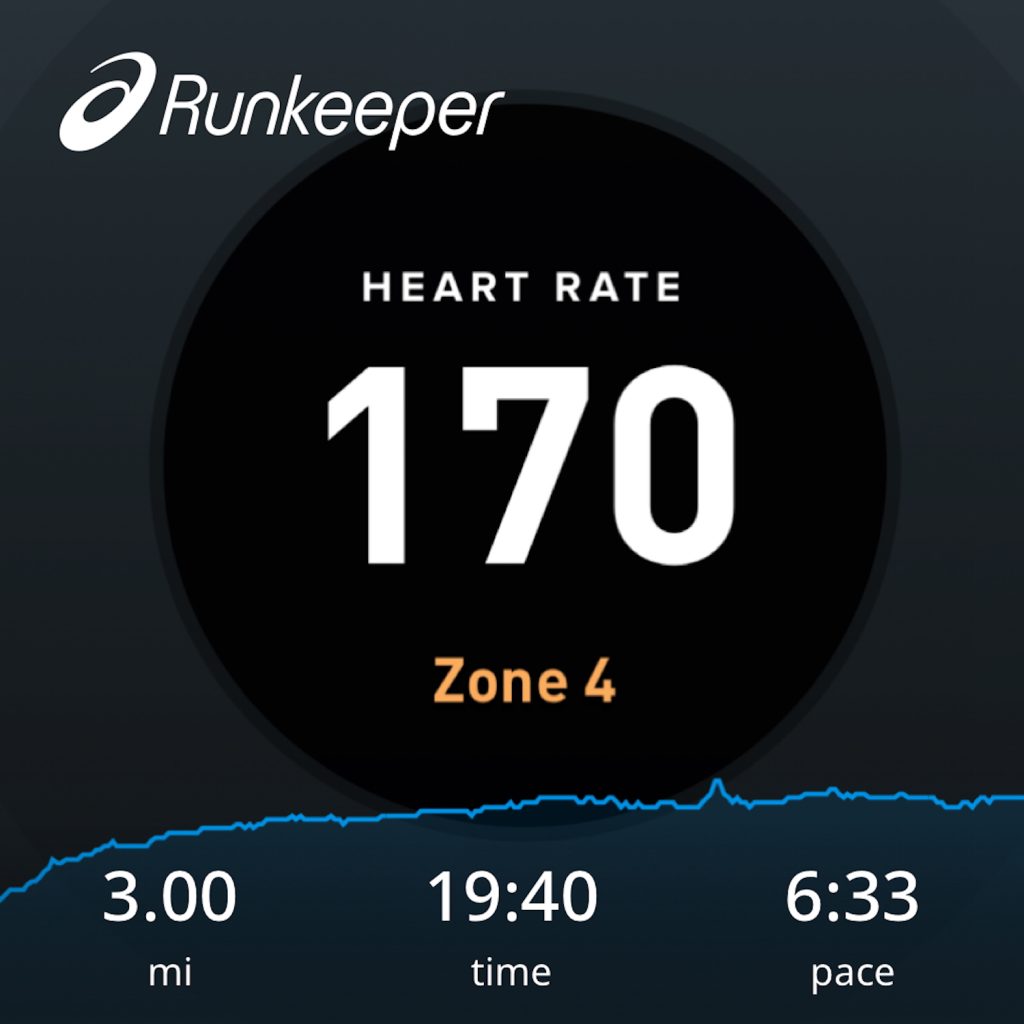
Today, I broke a goal I’ve been chasing for months. For nearly a year, I’ve been training with one strategy in mind: run faster and age slower. That approach paid off this morning when I ran 3 miles in 19:40, averaging 6:33 per mile. It wasn’t just a win on the stopwatch. This effort also delivered a measurable boost to my cardiovascular health and biological age.
According to my WHOOP data, this effort boosted my VO₂ Max from 58 to 60, placing me in the top 5 percent for my age group of 45-year-olds. Even more exciting, my WHOOP Age dropped by another 0.2, making me now 11.4 years younger than my chronological age with a pace of aging of just 0.2x. This was my fastest 5K ever, but more importantly, it was a longevity milestone.
Why VO₂ Max Is the Metric That Matters

VO₂ Max is a powerful predictor of long-term healthspan. It measures how much oxygen your body can use during peak activity, a direct reflection of cardiovascular efficiency and muscular oxygenation.
A recent study shows that higher VO₂ Max values are associated with reduced risk of chronic diseases and increased lifespan. In fact, it may be one of the most accurate predictors of all-cause mortality, more so than smoking or diabetes.
By pushing into Zone 4 heart rate territory (170 bpm) during this run, I wasn’t just going for speed. I was triggering adaptations that increase VO₂ Max, improve mitochondrial density, and stimulate cardiac output.
The Longevity Value of Anaerobic Workouts
Most of my daily runs are between 5 to 7 miles at an aerobic pace, which helps build endurance and support recovery. But short, fast efforts like today’s sub-20 three-miler place a very different kind of stress on the body.
Over the past few months, I’ve been adding these shorter, high-intensity runs once or twice a week, depending on how my body feels. They activate fast-twitch muscle fibers, demand high cardiac output, and push my lactate threshold higher. These are all key adaptations that improve both performance and long-term health.
This blend of aerobic base-building and anaerobic threshold work is what researchers call polarized training. It is one of the most evidence-backed ways to boost VO₂ Max. Even Bryan Johnson’s protocol blends steady-state movement with bursts of intensity to optimize healthspan.
Healthspan Gains You Can Feel (and Track)
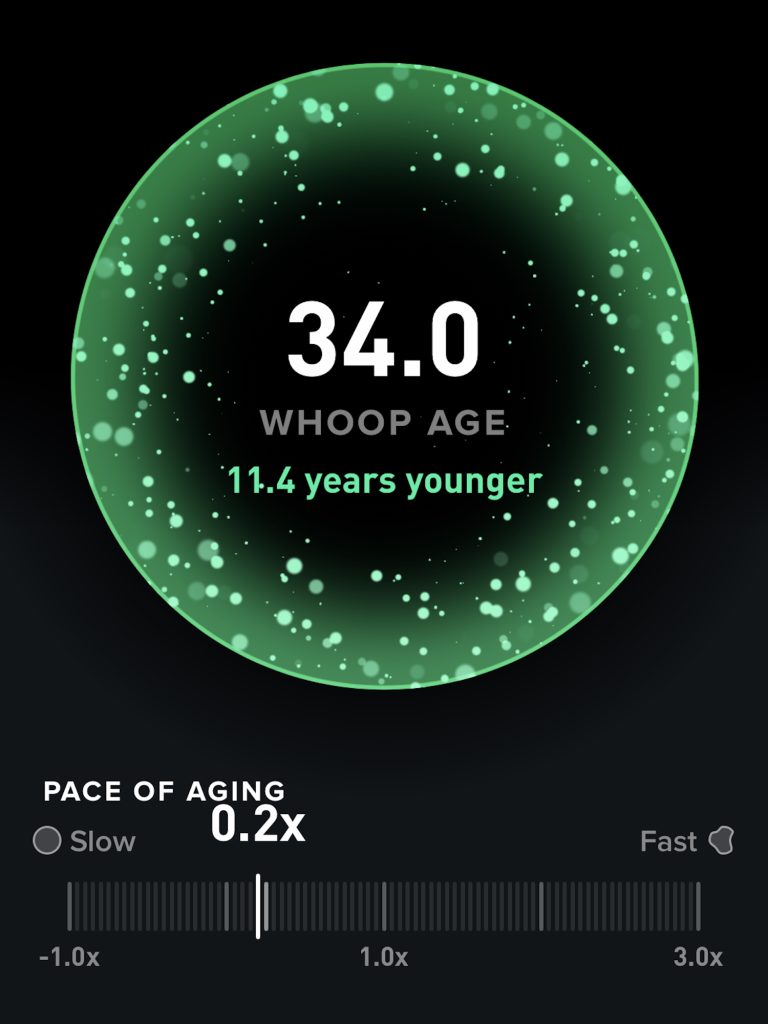
Over the past two weeks, since switching to the new WHOOP MG, which now tracks VO₂ Max and WHOOP Age, I’ve been able to measure the impact of my training more precisely. It’s one thing to feel fitter. It’s another to have the data to prove it. Here’s what happened following today’s breakthrough run:
- VO₂ Max increased from 58 to 60
- Pace of aging improved to 0.2x
- WHOOP Age dropped to 34.0
- Heart rate hit 170 bpm in Zone 4
- Cadence averaged 175 steps/min
- Elevation gain of 128 ft over 3 miles
My run wasn’t just a personal record, it was clear biological feedback that the training is delivering real results.
Final Thoughts
Hitting this milestone is about aging slower, not just about running faster. Every step today reflected months of effort, smart training structure, and a focused intent to improve my cardiovascular health.
VO₂ Max is one of the most powerful levers we have to increase longevity, and it is trainable at any age. The combination of aerobic volume and anaerobic intervals is proving to be the perfect formula for performance and healthspan gains.
New goal: Get to VO₂ Max 62 and run a 5K in sub-19:30 by the end of summer (September 1st).
🩺 Disclaimer
The content on I Won’t Die is for informational and educational purposes only. It is not a substitute for professional medical advice, diagnosis, or treatment. Always consult a qualified healthcare provider with any health concerns.
🚀 Get Started with Blueprint
Start optimizing your health today with $25 off your first order! Use our referral code to begin your Blueprint journey and take control of your longevity.
🏋️♂️ Track Your Sleep, Workouts & Recovery
Boost your performance and recovery with Whoop. Join with my referral link to get a free WHOOP 5.0 and one month free!
📲 Download the I Won’t Die App
Stay ahead with the latest news, updates, and insights. Download the I Won’t Die app now on the Apple App Store and Google Play!
📩 Contact Us
Have tips, photos, or questions? Want to collaborate? Reach out at [email protected] — we’d love to hear from you!
🔗 Stay Connected
Follow us on Don't Die, Facebook, X, Instagram, YouTube, and LinkedIn for Blueprint longevity and Bryan Johnson updates.
📬 Subscribe to I Won’t Die Newsletter
Get the latest longevity breakthroughs, Blueprint updates, and exclusive content straight to your inbox — sign up now!

The Sleep Blueprint: Bryan Johnson’s Data-Backed Guide to Better Rest

Fireworks, Freedom, and Fallout: What July 4th Is Doing to Your Body and Brain

How to Reduce PFAS Forever Chemicals in Your Body and Home

Are You Poisoning Your Pet Without Knowing It? Blueprint Quantified Just Went Live

The Power of Flavonoids: How Adding Them to Your Diet Can Support Healthy Aging

My First Microplastics Blood Test with Blueprint

Don’t Die Podcast #7: How Sauna Improved Bryan Johnson’s Vascular Health

Glass Bottles Contain More Microplastics Than Plastic or Cans, Surprising Study Finds

Why International Travel Is Brutal for Your Health and What You Can Do About It

How Bryan Johnson Removed 93 Percent of Microplastics From His Blood

What Ted Ryce Would Tell His 20-Year-Old Self About Health, Confidence, and Longevity

Who Is the Healthiest Person in the World? This Man’s Data-Driven Life May Be the Answer

How Sauna Sessions Helped Bryan Johnson Eliminate 7 Harmful Toxins

The Weekly Blueprint: How Planning Ahead Can Radically Improve Your Health and Productivity

Why Health Is Your Greatest Asset for Success, According to Bryan Johnson

Bryan Johnson Shares Details of His HBOT Protocol for Longevity

WHOOP MG Review: Improved Accuracy, New Features, and How WHOOP Age Compares to Blueprint’s Speed of Aging

Bryan Johnson Updates His Morning Routine Again: Here’s What’s New in May 2025

Bryan Johnson Sat in a 200°F Sauna for 7 Days. Here’s What Changed

Don’t Die Podcast #3: Why Resting Heart Rate May Be the Most Powerful Health Metric for Sleep and Longevity

My May Lab Results: What Improved, What Didn’t, and What’s Next

Does Bryan Johnson’s Sleep Routine Actually Work? We Put It to the Test

Can Shockwaves Rejuvenate Your Body? Bryan Johnson Thinks So

Why Allulose Might Be the Ultimate Longevity Sweetener

Don’t Die Podcast #2: Breathe Better, Live Longer With Hyperbaric Oxygen Therapy

What Bryan Johnson Just Told Bitcoin Conference 2025 About Sleep, Sex, and Living Forever
Bryan Johnson Puts Sauna to the Test for Longevity and Detox

“Sleep Is the Most Powerful Drug Available” Says Bryan Johnson

The Healthiest Lab Results Ever Recorded? Inside Bryan Johnson’s Longevity Bloodwork

How Bryan Johnson Gets Perfect Sleep Scores Every Night: A Blueprint for Deep Rest
-
 Bryan Johnson Updates3 months ago
Bryan Johnson Shares Details of His HBOT Protocol for Longevity
-
 My Longevity Journey3 months ago
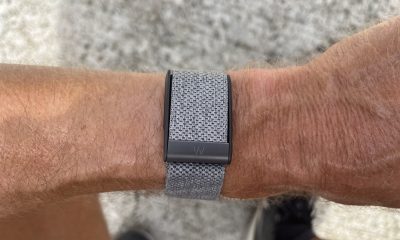
WHOOP MG Review: Improved Accuracy, New Features, and How WHOOP Age Compares to Blueprint’s Speed of Aging
-
 Bryan Johnson Updates3 months ago
Bryan Johnson Updates His Morning Routine Again: Here’s What’s New in May 2025
-
 Bryan Johnson Updates3 months ago
Bryan Johnson Sat in a 200°F Sauna for 7 Days. Here’s What Changed