Blueprint News
Why Working Out Before Bed Might Be Hurting Your Sleep

New research shows high-intensity exercise late in the day can harm sleep, recovery, and overall readiness, especially if done within four hours of bedtime.
Today, new data is shaking up how we think about evening workouts. A recent study has confirmed what many health optimizers have suspected: high-intensity exercise within four hours of bedtime can negatively impact sleep and recovery. Bryan Johnson recently highlighted this in a new video discussing how working out late in the day leads to measurable declines in both sleep quality, heart rate variability (HRV), among other things.
What the study found
The research observed that intense physical activity in the hours leading up to sleep caused:
- Delayed sleep onset (trouble falling asleep)
- Shortened total sleep time
- Lower overall sleep quality
- Elevated resting heart rate
- Decreased heart rate variability (HRV)
These effects combine to reduce your body’s ability to recover overnight, especially if you’re doing strength training, cardio intervals, or any workout that spikes your heart rate.
Why it matters
HRV and resting heart rate are two of the most reliable indicators of recovery and autonomic nervous system health. When you work out late, your sympathetic nervous system stays activated longer, which can delay the natural melatonin release and body temperature drop needed for deep sleep.
Over time, consistently poor sleep can lead to elevated cortisol, reduced muscle recovery, and even higher risk for metabolic or cardiovascular issues.
What does work at night
This doesn’t mean all activity is bad before bed. Gentle movements like walking, stretching, breath work, or meditation can actually help ease the body into a restful state. These low-intensity activities stimulate the parasympathetic nervous system, helping you wind down.
The Bryan Johnson protocol
Bryan Johnson personally avoids evening workouts, preferring to train first thing in the morning. His reasoning? Bryan’s morning workouts help kickstart alertness and set a positive tone for the rest of the day. By moving high-intensity training earlier, he minimizes disruption to his circadian rhythm and maximizes sleep quality.
Final Thoughts
If you’re doing intense running, HIIT, or lifting weights close to bedtime, consider shifting your workouts earlier in the day. The benefits are clear: better sleep, improved recovery, and higher readiness the next day. Sleep is the foundation for performance, longevity, and mental clarity. Make sure your workout schedule is working for you, not against you.
🩺 Disclaimer
The content on I Won’t Die is for informational and educational purposes only. It is not a substitute for professional medical advice, diagnosis, or treatment. Always consult a qualified healthcare provider with any health concerns.
🚀 Get Started with Blueprint
Start optimizing your health today with $25 off your first order! Use our referral code to begin your Blueprint journey and take control of your longevity.
🏋️♂️ Track Your Sleep, Workouts & Recovery
Boost your performance and recovery with Whoop. Join with my referral link to get a free WHOOP 5.0 and one month free!
📲 Download the I Won’t Die App
Stay ahead with the latest news, updates, and insights. Download the I Won’t Die app now on the Apple App Store and Google Play!
📩 Contact Us
Have tips, photos, or questions? Want to collaborate? Reach out at [email protected] — we’d love to hear from you!
🔗 Stay Connected
Follow us on Don't Die, Facebook, X, Instagram, YouTube, and LinkedIn for Blueprint longevity and Bryan Johnson updates.
📬 Subscribe to I Won’t Die Newsletter
Get the latest longevity breakthroughs, Blueprint updates, and exclusive content straight to your inbox — sign up now!



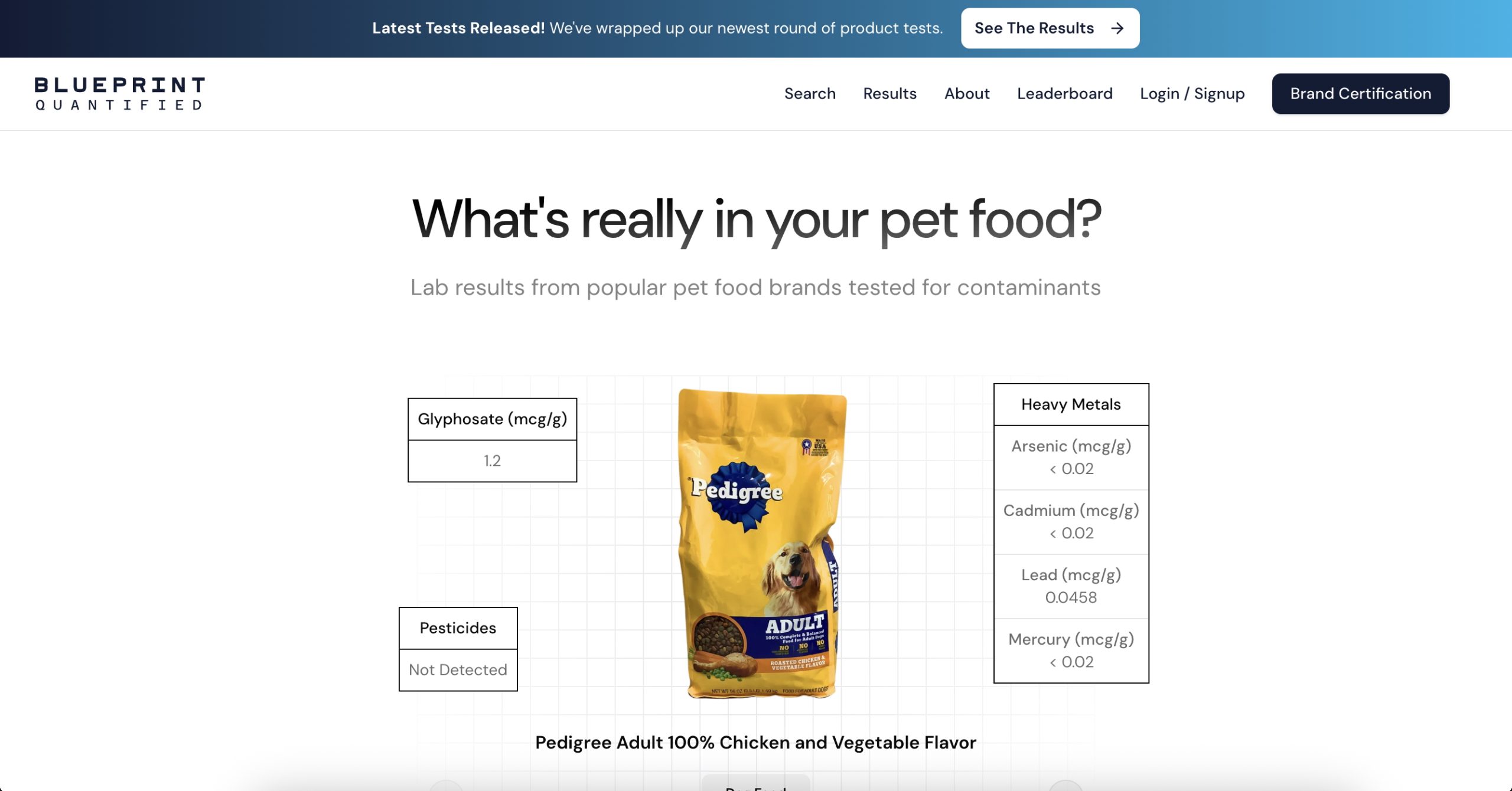
New lab results from Blueprint Quantified reveal alarming levels of glyphosate and heavy metals in top-selling dog and cat foods across the US.
Today, a quiet revolution in pet food transparency has begun. Bryan Johnson just unveiled a new initiative called Blueprint Quantified, a database that publicly tests food for toxins. The first focus: pet food. And the early findings are eye-opening for anyone who has ever trusted a brand from the pet store aisle.
This isn’t just another watchdog effort. Anyone can fund a test, and if a company already claims their product is clean, your money gets refunded. It’s a crowdsourced attempt to rapidly audit all US dog and cat foods using ISO-certified lab testing and it’s long overdue. And with this foundation in place, human food testing is likely next.
The Pet Food Contaminant Crisis
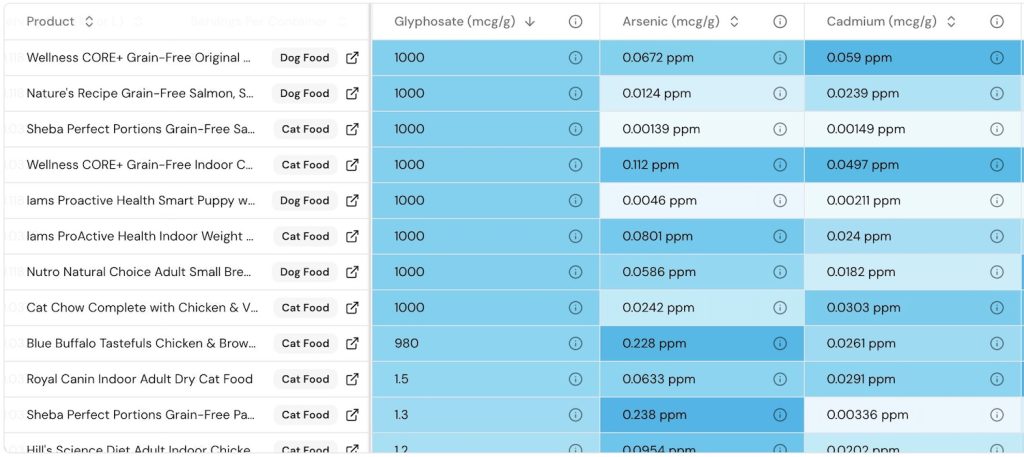
Out of 22 mass-market pet food products tested (12 dog foods and 10 cat foods), all but one contained glyphosate, and every single one contained toxic heavy metals, arsenic, cadmium, lead, and mercury.
Some of the key findings:
- Glyphosate was detected in 21 out of 22 products.
- Eight products maxed out the upper detection limit of 1,000 ppm.
- One product (Wellness CORE+ Original) hit 118,000 mcg per serving, equivalent to the maximum tolerable human exposure for a 150-pound adult in just one dog food meal.
- Heavy Metals
- Arsenic: Detected in 100% of samples. One popular wet cat food (Sheba) contained 8.9 mcg per 38 g serving.
- Lead: Royal Canin Indoor Adult Cat Food contained 343 ppb, or 12.9 mcg per serving, 26 times higher than California’s Prop 65 daily limit for lead (0.5 mcg).
- Cadmium and mercury were present in all products at varying levels.
Which Brands Were the Worst Offenders
Top products by total heavy metal toxicity per serving:
- Wellness CORE+ Original (Dog): 43.4 mcg
- Nutro Natural Choice Small Breed (Dog): 42.6 mcg
- Blue Buffalo Homestyle Senior (Dog, wet): 35.6 mcg
- Royal Canin Size Health Medium Dog: 33.7 mcg
- Pedigree Small Dog “Grilled Steak & Veg” (Dog): 27.9 mcg
And the Cleanest?
In a surprising twist, Purina Friskies Surfin’ & Turfin’ (Cat) had no detectable glyphosate and the second-lowest level of total heavy metals across all products tested. It’s a reminder that price and branding don’t always reflect quality or safety.
Why It Matters
Chronic exposure to glyphosate and heavy metals can lead to inflammation, kidney and liver dysfunction, neurological issues, and even cancer, especially in smaller animals with less capacity to detoxify. According to toxicology data, the cumulative burden of even microgram-level exposures over time can have serious consequences for pet health.
The alarming part? Most of these brands are marketed as “natural,” “premium,” or even “veterinarian-recommended.” However, lab data doesn’t lie.
How Blueprint Quantified Works
- Search: Review tested products at blueprintquantified.com
- Fund: Pay to test your pet’s food (and next will be human food). If it already has published results or the brand claims it is clean, your money is refunded
- Scale: As more users fund testing, the goal is to rapidly test all US dog and cat food and then human food.
Anyone can participate. It’s the beginning of a transparent, community-led effort to hold companies accountable and protect our pets from daily toxic exposure.
Final Thoughts
If you feed your dog or cat commercial food, you deserve full transparency about what’s inside. Blueprint Quantified is paving the way for a future where clean food isn’t a marketing claim, it’s a verified fact. These early findings are a wake-up call, but also a rare opportunity. With real data in hand, we can make informed decisions and demand higher standards from the industry. It’s time to stop guessing and start testing. And as this expands beyond pet food, we look forward to seeing the same level of accountability brought to the human food supply.
🩺 Disclaimer
The content on I Won’t Die is for informational and educational purposes only. It is not a substitute for professional medical advice, diagnosis, or treatment. Always consult a qualified healthcare provider with any health concerns.
🚀 Get Started with Blueprint
Start optimizing your health today with $25 off your first order! Use our referral code to begin your Blueprint journey and take control of your longevity.
🏋️♂️ Track Your Sleep, Workouts & Recovery
Boost your performance and recovery with Whoop. Join with my referral link to get a free WHOOP 5.0 and one month free!
📲 Download the I Won’t Die App
Stay ahead with the latest news, updates, and insights. Download the I Won’t Die app now on the Apple App Store and Google Play!
📩 Contact Us
Have tips, photos, or questions? Want to collaborate? Reach out at [email protected] — we’d love to hear from you!
🔗 Stay Connected
Follow us on Don't Die, Facebook, X, Instagram, YouTube, and LinkedIn for Blueprint longevity and Bryan Johnson updates.
📬 Subscribe to I Won’t Die Newsletter
Get the latest longevity breakthroughs, Blueprint updates, and exclusive content straight to your inbox — sign up now!

A diet rich in flavonoids may reduce frailty, improve mental health, and protect mobility, based on a study of 86,000 adults over 60 years old.
Today, we’re exploring how flavonoids, powerful compounds found in certain foods, can play a key role in supporting healthy aging. You’ve probably heard of flavonoids or seen foods with them in the Don’t Die Food Guide. However, you may not know exactly what they are or why they’re important.
These naturally occurring antioxidants, found in a variety of fruits, vegetables, and plant-based foods, offer a wide array of health benefits. From reducing inflammation to protecting brain function and mobility, flavonoids are a critical part of a healthful diet. Let’s dive into why incorporating these flavonoid-rich foods, like those included in Bryan Johnson’s own diet, is essential for healthy aging.
The Flavonoid Benefits Backed by Science
A large study, examining over 86,000 adults aged 60 and above, found impressive results. The individuals who consumed the highest amounts of flavonoid-rich foods had:
- A 15% lower risk of frailty
- A 12% lower risk of physical disability
- A 12% lower risk of mental health issues
These findings support the idea that flavonoids are not just good for you, they may be a key component in promoting healthy aging. By reducing the risk of frailty and disability and improving mental well-being, flavonoids help preserve quality of life in later years.
What Are Flavonoids and Where Can You Find Them?
Flavonoids are compounds that give many fruits and vegetables their vibrant colors, and they have potent antioxidant properties. These antioxidants help combat free radicals, which can damage cells and accelerate aging processes in the body.
Bryan Johnson, who advocates for a flavonoid-rich diet, lists his top sources:
- Extra Virgin Olive Oil: Rich in flavonoids and healthy fats, this oil is an excellent addition to any meal.
- Berries: Blueberries, blackberries, and strawberries are high in flavonoids, making them perfect for smoothies, snacks, or salads.
- Pomegranate and Grape Seeds: Packed with flavonoids and other beneficial compounds, these can be added to meals or eaten as snacks.
- Walnuts: Not only do they provide flavonoids, but they’re also a great source of omega-3 fatty acids.
- Cocoa (100%): Dark chocolate or raw cocoa offers a rich source of flavonoids.
- Matcha: This green tea powder contains a high concentration of flavonoids and is a great alternative to coffee.
How Do Flavonoids Work in the Body?
Flavonoids exert their benefits by reducing oxidative stress and inflammation in the body, which are two key contributors to the aging process. By lowering inflammation, they help protect the cardiovascular system, brain health, and overall mobility. The compounds also support the gut, immune system, and can even reduce the risk of chronic diseases such as heart disease, diabetes, and certain cancers.
A recent study further reinforces the impact of flavonoid consumption on aging. The study followed participants over several years and found that higher intake of flavonoid-rich foods led to a significantly lower risk of frailty, impaired physical function, and poor mental health. Notably, these benefits were most pronounced in women, but men also saw some positive effects, particularly related to mental health.
Final Thoughts
Including flavonoid-rich foods in your diet could be a simple yet effective strategy for promoting healthy aging. Whether it’s blueberries in your morning smoothie or a drizzle of extra virgin olive oil on your salad, small changes can lead to meaningful long-term benefits. While further research is needed, especially to explore sex-specific associations, the current evidence supports flavonoids as a powerful tool in preserving physical and mental well-being as we age.
🩺 Disclaimer
The content on I Won’t Die is for informational and educational purposes only. It is not a substitute for professional medical advice, diagnosis, or treatment. Always consult a qualified healthcare provider with any health concerns.
🚀 Get Started with Blueprint
Start optimizing your health today with $25 off your first order! Use our referral code to begin your Blueprint journey and take control of your longevity.
🏋️♂️ Track Your Sleep, Workouts & Recovery
Boost your performance and recovery with Whoop. Join with my referral link to get a free WHOOP 5.0 and one month free!
📲 Download the I Won’t Die App
Stay ahead with the latest news, updates, and insights. Download the I Won’t Die app now on the Apple App Store and Google Play!
📩 Contact Us
Have tips, photos, or questions? Want to collaborate? Reach out at [email protected] — we’d love to hear from you!
🔗 Stay Connected
Follow us on Don't Die, Facebook, X, Instagram, YouTube, and LinkedIn for Blueprint longevity and Bryan Johnson updates.
📬 Subscribe to I Won’t Die Newsletter
Get the latest longevity breakthroughs, Blueprint updates, and exclusive content straight to your inbox — sign up now!

Discover how international travel disrupts your sleep, metabolism, and mental health, and learn science-backed tips to protect your longevity on the road.
Today, we are uncovering the hidden health toll of international travel. Bryan Johnson recently posted research-backed insights revealing just how damaging frequent long-haul flights can be, from increased risk of blood clots to cognitive and metabolic dysfunction. If you care about healthspan and performance, this one is for you.
Inside Bryan’s Sleep Deprivation Experiment
Bryan Johnson recently returned from 11 days abroad and shared a candid, unfiltered account of how quickly sleep deprivation can dismantle even the most disciplined routines. For someone who has spent years optimizing every aspect of his biology, this personal experiment revealed just how dangerous disrupted sleep can be and why it matters for anyone who values high performance, emotional stability, and healthspan. Here’s what he experienced:
I just returned from 11 days of international travel, during which I was sleep deprived.

It was shocking to experience how ferociously cravings for bad foods spiked.

It took me back to my early entrepreneur days when it felt impossible to stop my bad eating habits. When you're sleep deprived, you become an animal and you can do little about it.

For the first few days, the cravings were present yet manageable. By day 5, they were getting irritatingly strong and by day 9, they were overwhelming.

The science of sleep deprivation and bad decision making is solid. After one night of inadequate sleep (4 to 5 hrs):

+ PFC drops by 10-20% (self-control)
+ a hyperactive 25-30% increase to eat addictive foods
+ devalue future rewards and high risk decisions

Lose one night’s sleep and your brain’s CEO (PFC) takes a 12% pay cut while the candy-craving intern gets a 25% raise.

In just a few days time of poor sleep, I became a different person.

I chose to do this experiment as I wanted to experience the effects of sleep deprivation given that I've been sleeping very well for years now.

Sleep deprivation makes you a little insane.

Though this all, I couldn't stop thinking about how most (or all?) of our world leaders are chronically sleep deprived. Culture culture wants to demands it. It's honestly concerning.
The Science Is Clear: Travel Breaks Your Body
Recent studies have shown the following:
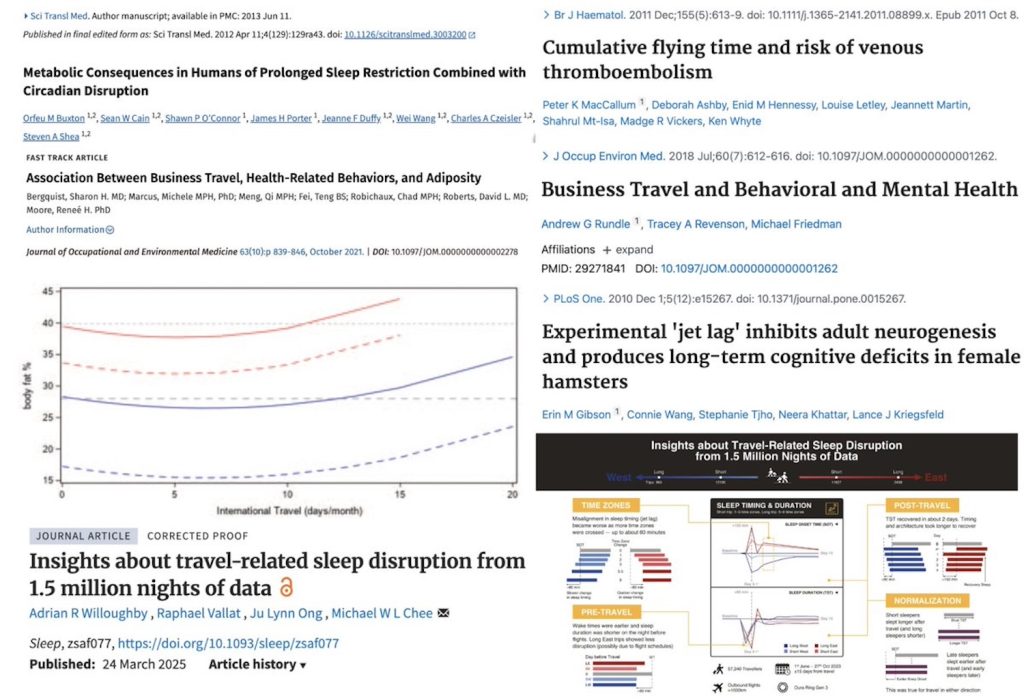
- 3x higher risk of blood clots when flying more than 12 hours within a 4-week span
- 1.7 to 3.7 times higher risk of anxiety, depression, and alcohol dependence with 21 or more travel nights per month
- 9 days required to restore metabolic and blood glucose control post-travel
- Sleep architecture and timing may take more than 15 days to normalize
- Travelers eat worse, exercise less, and fall out of routines, compounding the health damage
Experimental studies even show that jet lag impairs neurogenesis and leads to long-term cognitive deficits in animals. A massive study using 1.5 million nights of data confirmed that international travel disrupts sleep duration, timing, and quality at nearly every stage.
Tips to Travel Internationally Without Sacrificing Your Health
If travel is unavoidable, here is how to make it less destructive:
#1 Use Time Zone Strategy
- Shift your sleep schedule 2 to 3 days before departure to match your destination
- Use melatonin short-term to ease jet lag, ideally under medical guidance
#2 Move During the Flight
- Walk and stretch every 2 hours to reduce clotting risk
- Hydrate aggressively to prevent blood viscosity increases
#3 Protect Your Metabolism
- Avoid sugary or processed meals on the plane
- Use Blueprint’s Longevity Mix Travel Packs and Essential Supplements to stay consistent with your nutrition stack
#4 Keep Sleep Sacred
- Bring eye masks, earplugs, or white noise apps to control your environment
- Try to sync with local time immediately on arrival and get sunlight exposure in the morning to reset your clock
#5 Maintain a Routine
- Schedule a daily walk, light workout, or breathwork session even if short
- Bring Blueprint’s Daily Stack Travel Packs and EVOO travel bottles to maintain continuity in your regimen
Blueprint Travel Packs
Travel Packs are designed to help you stay consistent with your longevity protocol while on the go. Whether you’re flying across time zones or navigating disrupted routines, these convenient packs include pre-portioned servings of essential nutrients, supplements, and high-polyphenol extra virgin olive oil to support metabolic health, sleep, and inflammation control. Available in formats like the Daily Stack, Longevity Mix, and EVOO Travel Packs, they make it easy to maintain your Blueprint no matter where you are in the world.
Final Thoughts
International travel disrupts more than your calendar. It compromises your body at every level. From clotting risks to brain fog, the data makes one thing clear: travel is a performance tax. But with a little planning and the right tools, you can defend your health against the chaos of jet lag and time zone whiplash. Use these strategies to travel smarter, protect your biology, and keep building a future you will not want to escape from.
🩺 Disclaimer
The content on I Won’t Die is for informational and educational purposes only. It is not a substitute for professional medical advice, diagnosis, or treatment. Always consult a qualified healthcare provider with any health concerns.
🚀 Get Started with Blueprint
Start optimizing your health today with $25 off your first order! Use our referral code to begin your Blueprint journey and take control of your longevity.
🏋️♂️ Track Your Sleep, Workouts & Recovery
Boost your performance and recovery with Whoop. Join with my referral link to get a free WHOOP 5.0 and one month free!
📲 Download the I Won’t Die App
Stay ahead with the latest news, updates, and insights. Download the I Won’t Die app now on the Apple App Store and Google Play!
📩 Contact Us
Have tips, photos, or questions? Want to collaborate? Reach out at [email protected] — we’d love to hear from you!
🔗 Stay Connected
Follow us on Don't Die, Facebook, X, Instagram, YouTube, and LinkedIn for Blueprint longevity and Bryan Johnson updates.
📬 Subscribe to I Won’t Die Newsletter
Get the latest longevity breakthroughs, Blueprint updates, and exclusive content straight to your inbox — sign up now!

The Foods That Help Me Eat Big and Stay 155 to 160 lbs

I’m Officially a Rejuvenation Olympian, Ranked #167 Behind Bryan Johnson

When More Exercise Stops Moving the Needle

I Took My Function Health Mid-Year Test: Now We Wait

Download the New I Won’t Die App: Longevity News, Biohacking Insights, and Health Tools

The Best Advice Bryan Johnson Has Ever Given

Stop Guessing Your Run: StayGreen Turns WHOOP Data Into Today’s Training Decision

Electrolytes: The Small Habit That Quietly Changed My Recovery

Mission Accomplished: My Speed of Aging Result Is In and Blueprint Confirms the Trend

Take Two: The Speed of Aging Redemption

Red Mode Is Live: Become a Professional Sleeper

Function Health January Labs: One Year Later

Blood, Biomarkers, and Beach Miles

Starting the Year Strong, Not From Scratch

How To Build Great Health One Boring Day at a Time

Bryan Johnson Shares Details of His HBOT Protocol for Longevity

Bryan Johnson Updates His Morning Routine Again: Here’s What’s New in May 2025

The Healthiest Lab Results Ever Recorded? Inside Bryan Johnson’s Longevity Bloodwork

Bryan Johnson Sat in a 200°F Sauna for 7 Days. Here’s What Changed

How Sauna Sessions Helped Bryan Johnson Eliminate 7 Harmful Toxins

How Strong Are Your Bones? Bryan Johnson’s Blueprint for Bone Health and Longevity

WHOOP MG Review: Improved Accuracy, New Features, and How WHOOP Age Compares to Blueprint’s Speed of Aging

Bryan Johnson’s 2025 Skincare Routine Revealed: How He Reversed His Skin Age by Decades

How Bryan Johnson Removed 93 Percent of Microplastics From His Blood

Inside Bryan Johnson’s 2025 Longevity Protocol and Why It Inspires Me

Don’t Die Podcast #3: Why Resting Heart Rate May Be the Most Powerful Health Metric for Sleep and Longevity

My Blueprint Advanced Panel Results: A Deep Dive into Longevity Biomarkers

The One Food Bryan Johnson Swears By for Longevity: Extra Virgin Olive Oil

How Bryan Johnson Gets Perfect Sleep Scores Every Night: A Blueprint for Deep Rest

Who Is the Healthiest Person in the World? This Man’s Data-Driven Life May Be the Answer
-

 Bryan Johnson Updates9 months ago
Bryan Johnson Has A Girlfriend: Finding The Person Who Feels Like Home And Why It Changes Everything
-
 My Longevity Journey10 months ago
WHOOP Advanced Labs: Understanding the Body Behind the Data
-

 Bryan Johnson Updates10 months ago
Sauna, Fertility, and Why This Matters More Than Ever
-
 My Longevity Journey11 months ago
How I Cut My ApoB by 51% Without Medication